Surface treatments and fnishes
The following page of notes will cover commercial processes for:
- Papers and boards
- Timber based materials
- Metal based materials
- Polymers
- Textile based materials
- Electrical and mechanical systems
Papers and boards
Printing:
Common Methods:
- Offset Lithography: Uses plates to transfer ink to a rubber blanket, then to substrate
- Digital Printing: Direct application of toner/inkjet without plates (ideal for short runs)
- Screen Printing: Ink pushed through mesh stencils (for thick inks/special effects)
| Advantages | Disadvantages |
|---|---|
|
|
Uses: Packaging (boxes, labels), books/magazines, stationery, retail displays, wallpaper, and security printing (e.g., tickets).
Embossing:
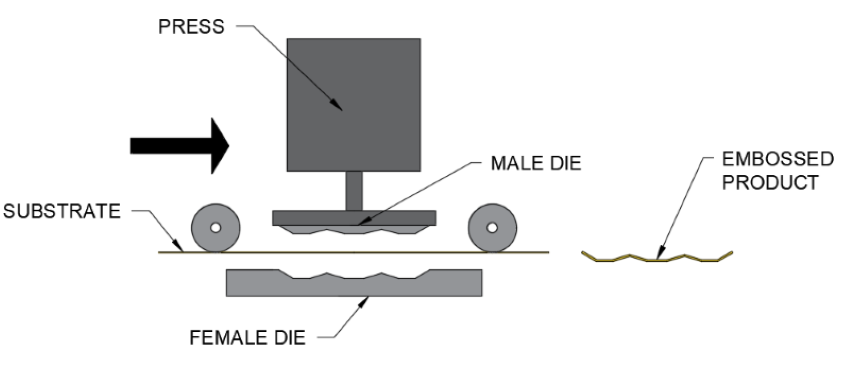
How it works:
- The paper is placed between the two formers
- The formers then close around the paper to form the shape
- Formers can be heated/cold
| Advantages | Disadvantages |
|---|---|
|
|
Uses: Toblerone card packaging, birthday cards
UV Varnishing:
How it works:
- A UV-reactive varnish is applied to the surface (by roller, spray, or curtain coating)
- The coated item passes under high-intensity UV lamps
- UV light triggers instant polymerization, curing the varnish in seconds
- No solvents evaporate - 100% of coating material remains on the product
| Advantages | Disadvantages |
|---|---|
|
|
Uses: Magazine covers, packaging, luxury goods, furniture surfaces, and promotional materials where high-gloss effects are desired.
Timber based materials
Painting:
| Advantages | Disadvantages |
|---|---|
|
|
Uses: Timber structures
Varnishing:
| Advantages | Disadvantages |
|---|---|
|
|
Uses: Hardwoods and sodtwoods
Tanalising (Pressure Treatment of Timber):
How it works:
- Timber is placed in a treatment vessel (retort) and vacuum-sealed
- Preservative solution (typically Tanalith E) is forced into the wood under high pressure
- The timber soaks for specified time (hours to days depending on thickness)
- Excess solution is drained and timber is left to dry/fixate
| Advantages | Disadvantages |
|---|---|
|
|
Uses: Fence posts, decking, garden furniture, playground equipment, marine timbers, and outdoor construction.
Metal based materials
Dip Coating:
How it works:
- The metal part is cleaned and pre-treated (degreased, etched, or primed)
- Submerged in a molten coating material (typically zinc, aluminum, or polymer)
- Withdrawn at controlled speed to ensure uniform coating thickness
- Excess material drains off and coating solidifies through cooling or curing
| Advantages | Disadvantages |
|---|---|
|
|
Uses: Structural steelwork, fencing, automotive parts, hardware, fasteners, and outdoor metal furniture.
Powder coating:
How it works:
- The metal is heated to 230 degrees
- The metal is then dipped into polymer powder
- The polymer coating is then allowed to cool
| Advantages | Disadvantages |
|---|---|
|
|
Uses: Cars, wheel arches, sports equipment
Galvanisation:
How it works:
- The metal is dipped into molten zinc
- The zinc acts as a sacrifical anode to protect metal underneath
| Advantages | Disadvantages |
|---|---|
|
|
Uses: Bridges, pipes, metal brackets
Polymers
Polishing:
How it works:
- Mechanical abrasion with progressively finer grits (120-3000+)
- Buffing with polishing compounds (typically polymer-based)
- Final gloss enhancement using rotary tools or automated systems
- Optional protective coating application (e.g., acrylic sealants)
| Advantages | Disadvantages |
|---|---|
|
|
Uses: Acrylic displays, polycarbonate lenses, automotive trim, and medical devices.
Printing:
Methods:
- Screen Printing: Ideal for thick ink layers on 3D surfaces
- Pad Printing: For irregular polymer shapes
- UV Digital Printing: Direct-to-substrate with instant curing
- Thermal Transfer: Durable markings for industrial parts
| Advantages | Disadvantages |
|---|---|
|
|
Uses: Product labels, control panels, packaging, and decorative surfaces.
Vinyl Decals:
Production Process:
- Design cut from colored vinyl sheets using CNC plotters
- Weeding (removal of excess material)
- Application of transfer tape
- Surface preparation and precise positioning
- Final burnishing for adhesion
| Advantages | Disadvantages |
|---|---|
|
|
Uses: Vehicle graphics, signage, equipment labeling, and decorative surfaces.
Textile based materials
Printing:
Common Methods:
- Screen Printing: Ink forced through mesh screens (best for bold designs)
- Digital Sublimation: Heat transfers dye into synthetic fibers
- Block Printing: Hand-carved blocks pressed onto fabric
- Rotary Printing: High-speed roller printing for mass production
| Advantages | Disadvantages |
|---|---|
|
|
Uses: Fashion apparel, home textiles, promotional wear, and technical fabrics.
Dyeing:
Process Types:
- Exhaust Dyeing: Fabric immersed in dye baths (batch process)
- Continuous Dyeing: For large volumes with padding mangles
- Yarn-Dyeing: Coloring fibers before weaving/knitting
- Garment Dyeing: Finished products dyed for vintage effects
| Advantages | Disadvantages |
|---|---|
|
|
Uses: Solid-color garments, upholstery fabrics, medical textiles, and military uniforms.
Stain Protection:
Treatment Methods:
- Fluoropolymer Coatings: (e.g., Teflon) creates molecular barrier
- Nano-Coatings: Silicone-based invisible protection
- Plasma Treatment: Surface modification for repellency
- Bio-Based Treatments: Eco-friendly wax/resin applications
| Advantages | Disadvantages |
|---|---|
|
|
Uses: Performance apparel, restaurant linens, outdoor furniture, and automotive interiors.
Electrical and mechanical systems
PCB Lacquering (Conformal Coating):
Process:
- Cleaning: PCB is degreased and dried to remove contaminants
- Application: Coating applied via spraying, dipping, or selective dispensing
- Curing: UV, thermal, or moisture-cured depending on coating type
- Inspection: Thickness and coverage verified (50-150µm typical)
| Advantages | Disadvantages |
|---|---|
|
|
Coating Types: Acrylic (general purpose), Silicone (high temp), Urethane (chemical resistant), Parylene (vapor deposition)
Lubrication:
Methods:
- Oil Lubrication: Mineral/synthetic oils for high-speed systems
- Grease Application: Thickened oils for long-term protection
- Dry Lubricants: PTFE or graphite where liquids are unsuitable
- Automated Systems: Centralized oil mist or grease injection
| Advantages | Disadvantages |
|---|---|
|
|