Wood finishing

Wood finishing:


Applied finish

Polyurethane Varnish:

Advantages Disadvantages
  • Extremely durable and scratch-resistant
  • Excellent moisture protection
  • Available in gloss, satin and matte finishes
  • Strong fumes require ventilation
  • Long drying time between coats
  • Can yellow over time

Uses: Hardwood floors, furniture, work surfaces

Acrylic Varnish:

Advantages Disadvantages
  • Water-based and low odor
  • Dries clear without yellowing
  • Quick drying time
  • Less durable than polyurethane
  • Not as moisture resistant
  • Can raise wood grain

Uses: Indoor furniture, craft projects, decorative items

Water Based Paints:

Advantages Disadvantages
  • Low VOC and environmentally friendly
  • Easy cleanup with water
  • Fast drying time
  • Less durable than oil-based
  • Can raise wood grain
  • Poor adhesion to glossy surfaces

Uses: Interior walls, furniture, children's toys

Stains:

Advantages Disadvantages
  • Enhances wood grain appearance
  • Available in various colors
  • Penetrates wood surface
  • Requires topcoat for protection
  • Can be blotchy on some woods
  • Color fades with UV exposure

Uses: Furniture, decking, interior woodwork

Colour Wash:

Advantages Disadvantages
  • Creates translucent, weathered look
  • Allows wood grain to show through
  • Easy to apply and blend
  • Limited protection
  • Requires skill for even application
  • Needs sealing for durability

Uses: Shabby chic furniture, decorative effects

Wax Finishes:

Advantages Disadvantages
  • Natural, non-toxic finish
  • Beautiful matte sheen
  • Easy to touch up
  • Offers minimal protection
  • Requires frequent reapplication
  • Not heat resistant

Uses: Antique furniture, decorative pieces

Danish Oil:

Advantages Disadvantages
  • Penetrates deep into wood
  • Enhances natural grain
  • Combines stain and finish in one
  • Long curing time
  • Needs multiple coats
  • Limited water resistance

Uses: Woodturning, kitchen utensils, fine furniture


Pressure treating with chemical preservatives
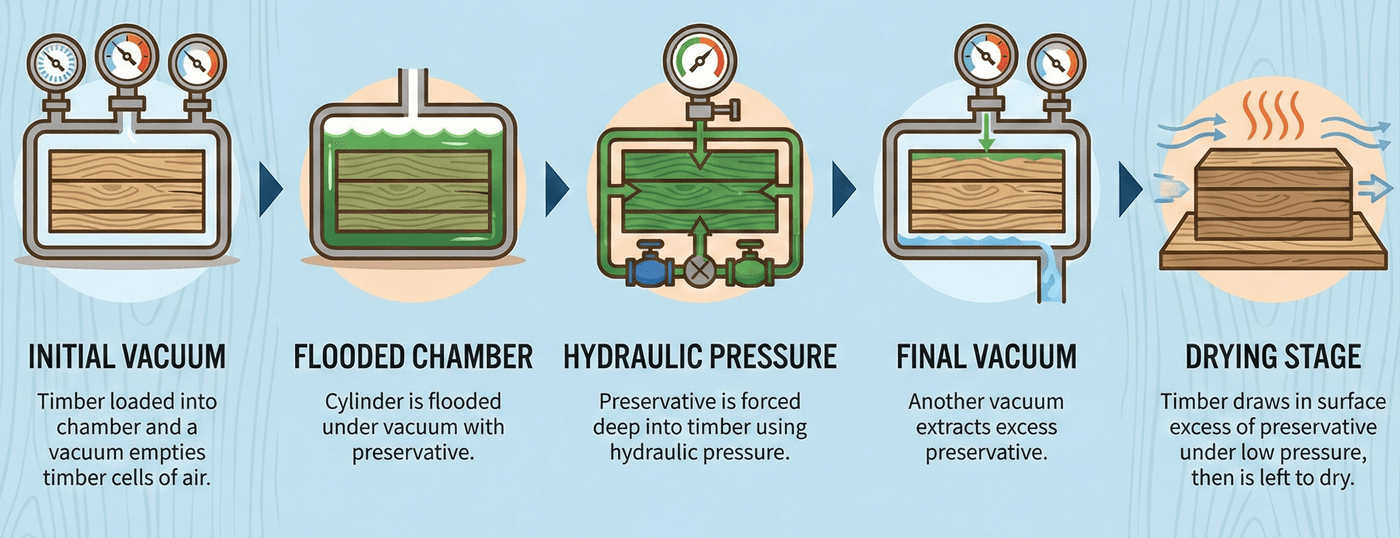
Diagram of plasma cutting process
Advantages Disadvantages
  • Deep penetration of preservatives into wood fibers
  • Provides long-term protection against rot and insects
  • More effective than surface treatments alone
  • Extends lifespan of timber by 20+ years
  • Requires specialized equipment (pressure vessels)
  • Chemicals can leach out over time
  • Treated wood cannot be burned safely
  • May cause corrosion of metal fasteners

Uses: Outdoor decking, fence posts, marine pilings, playground equipment

Topic test:

Interactive flashcards:

More from DTBase